I face fewer problems now in term two but what I am most worried about is the mid year exams. I try to prepare myself for the exams by constantly revising my science notes so that I will be well prepared for the exam.
I have learnt the use of different measuring instruments, mass ,weight ,density , elements, compounds and mixtures.
These knowledge and skills will be relevant in the research industry construction and the use of the measuring instruments will useful for architects.
I have learnt about obsolete units of measurement, the impact humans have made on nature and how we may be driving ourselves into extinction from the self directed and independent learning component of term 1.
Saturday, 28 June 2014

Component 4 personal work samples
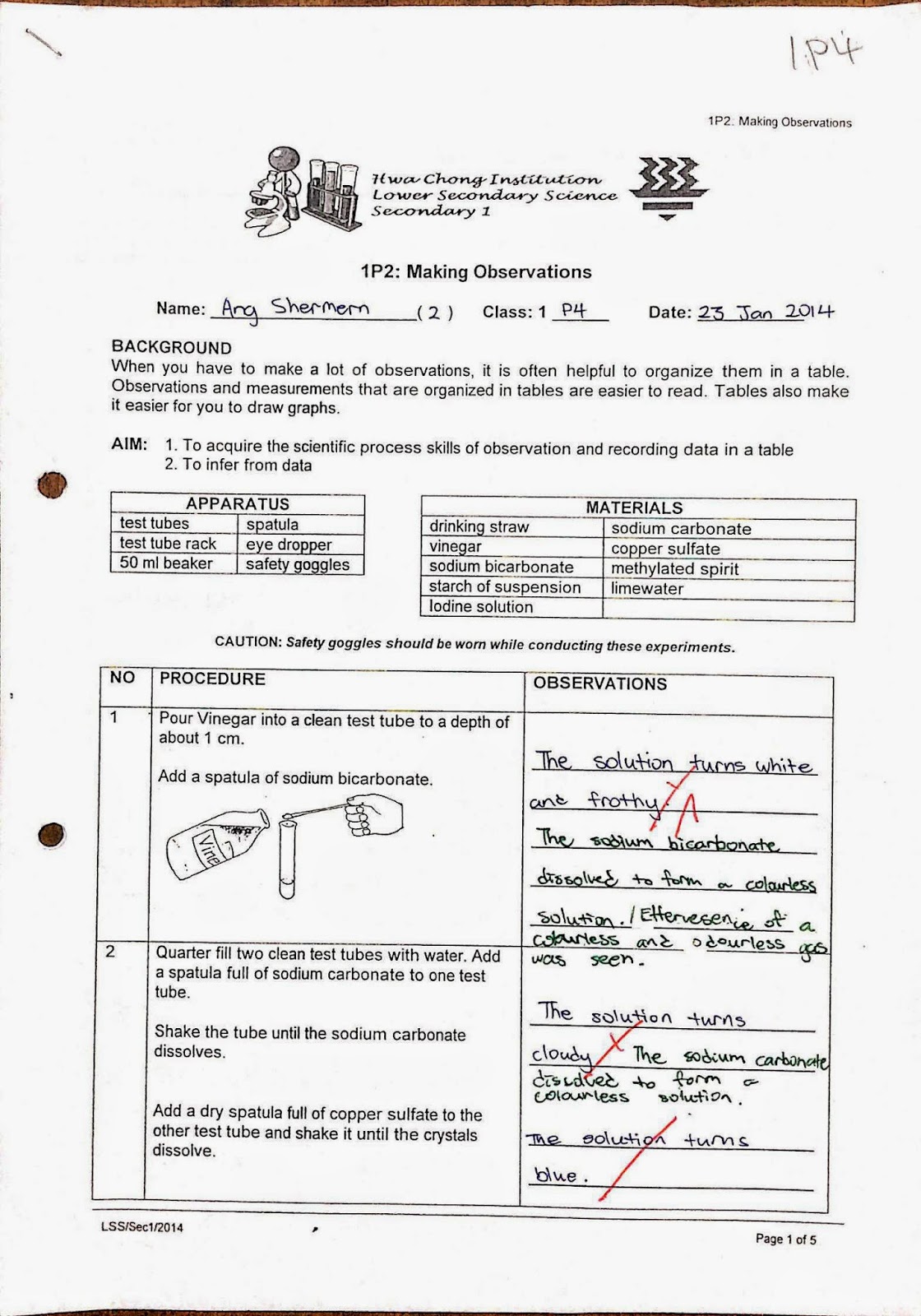

This was one of the first lab visits of the year and all of us were excited using the lab apparatus and watching the chemical reactions in the test tubes. Many of us did not have a chance to work in a lab in primary school and the was certainly a first for us.


Component 3: Self-Directed and Independent Research Learning Term 1
A: Independent Research
Topic 2: Measurement units of the past
Ancient Roman Units of Measurement
Acetabulum was a measure of volume (fluid and dry) used by the Ancient Romans.
Amphora was a unit for measuring liquids or bulk goods in the Roman Empire, and for estimating the size of ships and the production of vineyards.
Duella was an ancient Roman unit of weight
Who: The Ancient Romans
What: Weight Length and Volume
When: 27 BC-476 AD
Where: Ancient Rome
Why: For the complex measuring problems of civilization - surveying land to register property rights, or selling a commodity by length - a more precise unit is required.
How:The ancient Roman Units of Measurements were built on the Hellenic system with Egyptian Hebrew, and Mesopotamian influences. The Roman units were comparatively consistent and well documented.
Topic 4: What is time
To me, time is not definable. I define time as a film and just a fabric for us to move and act.
Time may be there or not be there to me time is just a measurement thought up by man explaining something that is not understood to satisfy his need to be all knowing.
B: Critical reviews
3 Billion to Zero: What Happened to the Passenger Pigeon?http://www.scientificamerican.com/article/3-billion-to-zero-what-happened-to-the-passenger-pigeon/
The main purpose of this article is to remind us how human race have impacted on nature. The key scientific question that the author is addressing is how humans have been driving species to extinction
This article is about a postdoctoral associate at National Taiwan Normal University tried to find out how the passenger pigeon species was wiped out.
I think this article will really help in helping people realize the huge and negative impacts humans can have on nature and make them change their way of living which can hugely impact the course of nature and could well determine the future of the human race for we just might be like the pigeons and the boom and bust scenario may happen to us and our advancement might very well lead to our own doom.
Friday, 27 June 2014
Component 2: Reflections on Science Performance and Experiences Term 1
Termly Science Performance
My target for term 1 is at least a B3 as my science has never been my strong subject. My plan to achieve my target is to work hard and revise on the science concepts I have learnt. For class tests, I need to improve on my calculations and presentation of work.
Measurements


The objective of this lesson it to learn how to use and read the measurements on a micrometer screw gauge and vernier calipers.
This lesson was carried out in the lab.
From this lesson, I have learnt how to use two new measuring instruments, the micrometer screw gauge and the vernier caliper.
I did not really enjoy this activity because the numbers on the instruments were quite small and I had trouble reading them. I also had trouble with the decimal places and cm and mm.
Pendulum

The objective of this activity is to find out the relationship between the length of the pendulum and the time taken for one oscillation.
This activity was carried out in the science lab.
I have learnt from this activity that the shorter the length of the pendulum, the shorter the time taken for one oscillation.i also learnt that the safest way to conduct this experiment is to release the pendulum at a angle of 10 degrees any more than that, the pendulum may swing out of control.
I liked watching the pendulum swing back and forth the most as it felt hypnotic.
Bunsen Burners

The objective of this was to learn the right way to use the bunsen burner during practical work.
This activity was carried out in the science lab.
I have learnt the correct use of the bunsen burner and when the air hole is opened, a non luminous flame will be formed and when it is nt, a luminous flame will be formed. And when the air hole is fully opened, strike back may occur as the flame will bun at the gas jet.
My favourite part of this activity is using the bunsen burner and watching the flame burn and feeling the heat on my face.
Component 1:Issues in Teaching and Learning Science Term 1
I have faced many problems in teaching and learning science and the most serious problem I face is the understanding of science concepts. I try to solve this problem by clarifying the concepts with my classmates that do understand them or asking my parents and siblings. I found this very useful as I can communicate with my friends and family members easily.
I have learnt how to plot graphs, scientific methods and basic laboratory orientation.
These knowledge and skills are useful are very relevant in the real world. For example, graph plotting is useful if you need to plot statistics for your company. You will need to know what type of graph is the most useful for which type of data. As for the scientific methods and basic lab orientation, they will be useful if I were to go into the research industry.
I have also learnt about the Rorschach test and how it uses ink blots to test subjects' perceptions of them they are recorded and then analyzed using psychological interpretation, complex algorithms, or both. Some psychologists use this test to examine a person's personality characteristics and emotional functioning. It has been employed to detect underlying thought disorder, especially in cases where patients are reluctant to describe their thinking processes openly. I have also learnt about Moore's law which is the observation that, over the history of computing hardware , the number of transistors in a dense integrated circuit doubles approximately every two years. Lastly, I also learnt more about the SI units and how they are used and why we use them.
Wednesday, 18 June 2014
SI Units
SI Units
The International System of Units is the modern form of the metric system and is the world's most widely used system of measurements, used in both everyday commerce and science. It comprises a coherent system of units of measurement built around seven base unit , 22 named and an indeterminate number of unnamed coherent derived unit, and a set of prefixes that act as decimal-based multipliers. It is part of the International System of Quantities
The standards, published in 1960 as the result of an initiative started in 1948, are based on the meter -kilogram-second (MKS) system, rather than the centimeter-gram-second (CGS) system, which, in turn, had several variants. The SI has been declared to be an evolving system; thus prefixes and units are created and unit definitions are modified through international agreement as the technology of measurement progresses and the precision of measurements improves. The 25th CGPM meeting in the fall of 2014 will change the definitions of some base units, particularly the kilogram.
The driving force behind the development of the Système international was the diversity of units that had sprung up within the CGS system of units and the lack of coordination between the various disciplines that made extensive use of units of measurement.
The system has been adopted by most countries in the developed world, though within English-speaking countries, the adoption has not been universal. In the United States metric units are not commonly used outside of science, medicine and the government; however, United States customary units are officially defined in terms of SI units. The United Kingdom has officially adopted a partial metrication policy, with no intention of replacing imperial units entirely. Canada has adopted it for most governmental and scientific purposes, but imperial units are still legally permitted and remain in common use throughout many sectors of Canadian society, particularly in the building trade and railway sectors.
Monday, 9 June 2014
Moore's Law
Moore's law
Moore's law is the observation that, over the history of computing hardware , the number of transistors in a dense integrated circuit doubles approximately every two years. The law is named after Gordon E. Moore, co-founder of Intel Corporation, who described the trend in his 1965 paper. His prediction has proven to be accurate, in part because the law is now used in the semiconductor industry to guide long-term planning and to set targets for research and development. The capabilities of many digital electronic devices are strongly linked to Moore's law:Processing speed, memory capacity, sensors and even the number and size of pixels in digital camera. All of these are improving at roughly exponantial rates as well. This exponential improvement has dramatically enhanced the impact of digital electronics in nearly every segment of the world economy. Moore's law describes a driving force of technological and social change, productivity and economic growth in the late 20th and early 21st centuries.
The period is often quoted as 18 months because of Intel executive David House, who predicted that chip performance would double every 18 months (being a combination of the effect of more transistors and their being faster).
Although this trend has continued for more than half a century, Moore's law should be considered an observation or conjecture and not a physical or natural law. Sources in 2005 expected it to continue until at least 2015 or 2020. However, the 2010 update to the International Technology Roadmap for Semiconductors predicted that growth will slow at the end of 2013, when transistor counts and densities are to double only every three years.
Subscribe to:
Posts (Atom)